

Nearsightedness, also known as myopia, is a common vision condition that makes distant objects appear blurry while close-up objects remain clear. While nearsightedness isn’t reversible, many effective treatments are available to correct your vision and help you see the world clearly. These options range from corrective lenses to procedures that reshape the eye.
What Causes Nearsighted (Myopic) Vision?
Myopia often begins in childhood, and it tends to progress until adulthood. It’s typically a result of a combination of factors, including genetics.
Daily habits, such as spending long hours on close-up tasks, may also play a role in the development of myopia.
Common Signs of Nearsightedness
You may have myopia if you notice any of the following signs:
- Blurry vision when you look at distant objects
- The need to squint or partially close your eyelids to see clearly
- Headaches caused by eyestrain from conditions like computer vision syndrome
- Difficulty with vision while driving, especially at night
What Worsens Nearsightedness?
Certain activities can contribute to the progression of myopia, especially for children and young adults. Extended time spent looking at digital screens or reading without taking breaks can increase eye strain. A lack of time spent outdoors is another potential factor that can influence vision changes.
How Nearsighted Vision Can Be Corrected
Correcting nearsightedness involves helping your eye focus light correctly onto the retina. There are several popular and effective methods that can help you see distant objects with clarity. The right choice often depends on your lifestyle, age, and overall eye health.
Eyeglasses & Contact Lenses
The most common tools for correcting nearsighted vision are eyeglasses and contact lenses. These work by adjusting the path of light as it enters your eye, causing it to focus properly on your retina.
Refractive Surgery Options
For some adults, a surgical procedure like LASIK can be an option to correct nearsightedness. This type of surgery carefully reshapes the cornea—the clear front surface of your eye. By changing the cornea’s shape, refractive surgery helps your eye focus light correctly on the retina, thereby reducing or eliminating the need for glasses.
Orthokeratology (Ortho-K)
Orthokeratology is a non-surgical approach that involves contact lenses worn overnight. While you sleep, these lenses gently and temporarily reshape your cornea. You remove them in the morning and can often experience clear vision throughout the day without needing glasses or daytime contacts.
The Question of Natural Correction & Eye Exercises
Many people search for ways to improve their eyesight without glasses, contacts, or surgery. While healthy habits are important for your eyes, it’s helpful to understand what can and cannot be achieved with eye exercises. A structured approach to vision care typically provides more predictable outcomes.
Can You Train Your Eyes to Not Need Glasses?
Eye exercises can be a great way to relieve discomfort from eye strain. However, they don’t change the anatomy of your eye. This means that exercises cannot reverse nearsightedness.
For certain conditions, like eye misalignment, your eye doctor may recommend a structured program of supervised vision therapy to retrain specific vision skills.
Lifestyle Habits for Good Eye Health
You can support your long-term eye health through simple daily practices. For instance, you can adopt the 20-20-20 rule to give your eyes a break from screen time. Every 20 minutes, look at something 20 feet away for 20 seconds.
A balanced diet and spending more time outdoors can also contribute to keeping your eyes healthy.
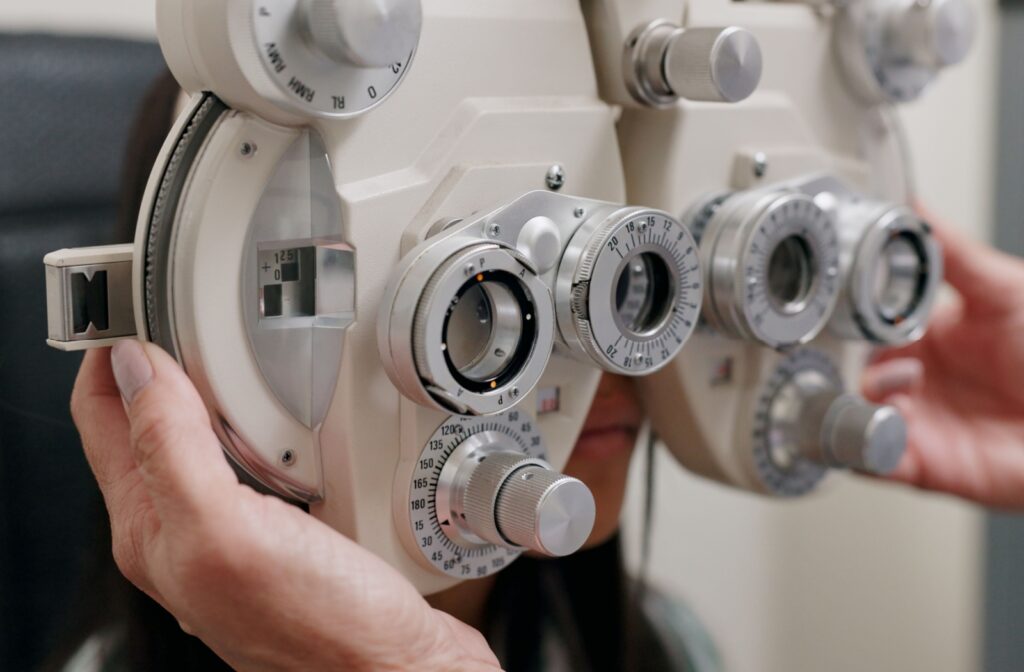
Understand Your Eyeglass Prescription
Your prescription can look confusing with all its numbers and abbreviations, but in the end, it’s just a detailed map of your vision needs. Learning what the numbers mean is a great step toward understanding your eyesight.
What a Minus Number Means
On your prescription, a minus sign (-) before the first number indicates that you have nearsightedness. This number, called the sphere, measures the lens power needed to correct your distance vision. The larger the number, the stronger your prescription is.
Is Minus 1.5 Eyesight Bad?
A prescription of -1.50 is considered a mild level of nearsightedness. At this level, you would likely see clearly for close-up tasks like reading a book or working on a computer. However, you might find it difficult to see distant objects like road signs or a screen across a large room.
When to See an Eye Doctor in Bonita
Regular eye examinations are a key part of maintaining your overall health. These exams can detect vision changes early and help you continue to maintain clear vision.
Regular Eye Exams for Children
A child’s vision can change rapidly as they grow. Consistent eye exams are important for detecting nearsightedness early and providing the right correction to support them in school and during play.
Eye Health for Adults & Seniors
As an adult, your vision needs will continue to evolve. Regular eye exams for adults help you keep your prescription updated and let your optometrist screen for other conditions that become more common with age. This is a simple way to maintain your independence and quality of life.
Schedule Your Comprehensive Eye Exam
If you or a family member notices a change in vision, or if it’s simply been a while since your last check-up, it may be time to schedule an appointment. At Total Vision Bonita, we customize every exam to you and your family’s needs.
Schedule a visit with us today to see how an eye doctor in Bonita can help you achieve clear, comfortable vision.