
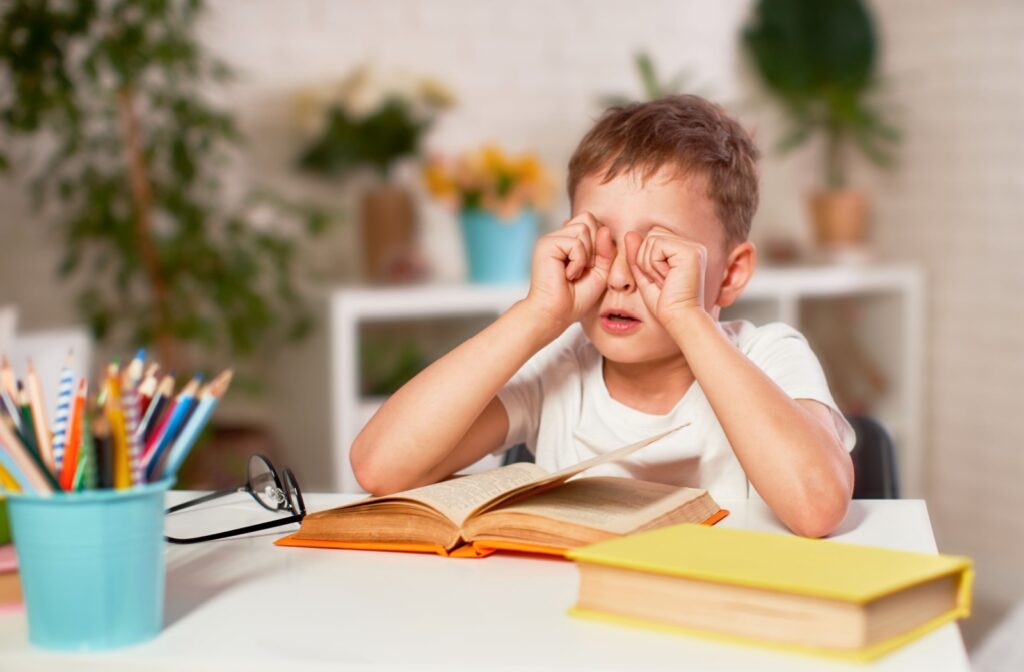
You watch your child struggle to see the whiteboard at school or to make out street signs during car rides. These moments can feel concerning, especially when you’re not sure if what you’re seeing indicates a real vision problem or just typical childhood behavior.
Early warning signs of myopia in children include frequent squinting at distant objects, sitting too close to screens, complaints of blurry vision, headaches after visual activities, and declining academic performance on distance-vision tasks.
Recognizing these signs early helps you take action before the condition progresses further. Total Vision Bonita specializes in identifying these warning signs through comprehensive children’s eye exams that detect vision changes before they affect your child’s learning and development.
Recognize the Physical Signs Your Child Shows
Watch for Visual Behaviors
Your child’s body language tells a story about their vision. When they repeatedly squint at distant objects, they’re trying to create a pinhole effect that temporarily improves their focus.
You might notice them gravitating toward the TV screen or holding tablets and phones much closer to their face than seems normal. This happens because near objects appear clear while distant ones look blurry.
Head tilting is another common behavior. Children instinctively adjust their head position to achieve the clearest line of sight as their vision develops.
Notice Eye-Related Actions
Excessive blinking and eye rubbing often signal that your child’s eyes are working harder than they should. The extra effort required to focus on distant objects can lead to eye strain and fatigue.
When children cover one eye to see something far away, they’re trying to reduce double vision or improve clarity. This behavior suggests their eyes aren’t working together effectively at a distance.
You’ll see them consistently moving closer to objects they want to see clearly, whether it’s approaching a poster on the wall or stepping forward to read signs. Understanding myopia symptoms can help you recognize these behaviors as potential warning signs rather than simple habits.
Listen for Complaints About Vision
Common Vision Concerns
Children often express their vision struggles in simple terms. They might tell you that things look “fuzzy” or “blurry” when they’re far away, while close-up activities like reading remain comfortable.
School-related complaints frequently center around the classroom board. Your child might mention they can’t see what the teacher writes or that letters look unclear from their seat.
During car rides or walks, they may point out that they can’t read street signs, store names, or other distant text that you can see clearly.
Physical Discomfort Signs
Headaches that develop after school or visual activities often indicate eye strain. Your child’s focusing system works overtime to compensate for nearsightedness, leading to muscle fatigue around the eyes and forehead.
Complaints of tired or heavy eyes, especially after activities requiring distance vision, suggest the visual system is under stress. Children may describe their eyes feeling “weird” or uncomfortable.
General irritation around the eye area can develop from the constant effort to focus clearly on distant objects throughout the day. These symptoms often worsen with extended use of digital devices, making the 20-20-20 rule particularly helpful for managing discomfort.
Monitor Changes in Daily Activities
Academic Performance Shifts
Declining grades in subjects that require copying from the board or viewing distant visual aids can signal the onset of myopia. Your child might start falling behind not because they can’t understand the material, but because they can’t see it clearly.
Teachers often notice when children appear less engaged or avoid participating in classroom activities using the board. They might report that your child appears distracted or disinterested when the real issue is unclear vision.
Concentration problems can develop when children expend mental energy trying to decipher blurry, distant information instead of focusing on the learning content.
Sports & Recreation Challenges
Sports that involve tracking balls or objects at a distance become more challenging for children with developing myopia. You might notice decreased performance in baseball, soccer, or tennis.
Children may hesitate to join outdoor activities or team sports, where clear distance vision provides a significant advantage. They might prefer close-up activities like drawing or reading.
Difficulty judging distances accurately can affect their confidence in physical activities and playground interactions with other children. Outdoor time for myopia prevention can help protect your child’s vision while supporting their participation in sports and recreation.
Know When Professional Testing is Needed
Schedule Comprehensive Eye Exams
Annual eye exams help catch vision changes before they significantly impact your child’s daily life. Regular screenings can detect refractive changes even when children haven’t learned to articulate their vision concerns.
When you notice any combination of warning signs, schedule an appointment promptly. Early detection enables intervention to slow myopia progression through specialized myopia-control treatments.
Share your family’s vision history with the eye care team, as genetics play a significant role in myopia development. Children with myopic parents face higher risks of developing the condition themselves.
Diagnostic Tests Your Child May Receive
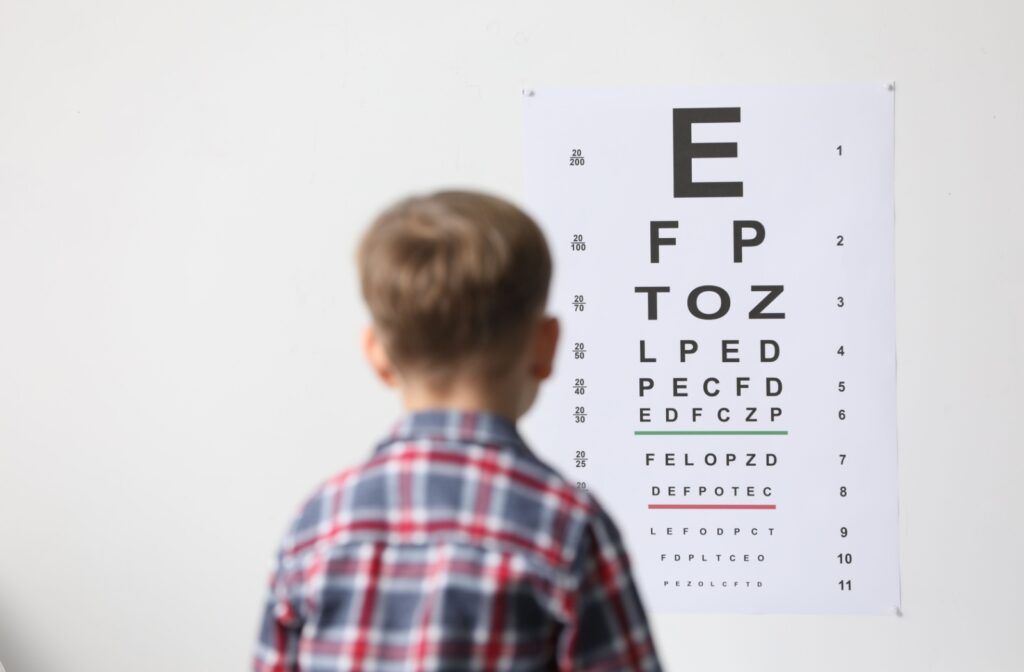
Visual acuity testing uses eye charts to measure how clearly your child sees at various distances. This fundamental test reveals whether distant objects appear blurry compared to age-appropriate vision standards.
Retinoscopy involves shining light into your child’s eyes to observe how it reflects off the retina. This objective test helps determine refractive error even when children are too young to provide reliable feedback.
Phoropter testing allows the doctor to fine-tune prescription measurements by having your child compare different lens options to find the clearest vision. Comprehensive eye exam components can help prepare you and your child for the appointment.
Take Action to Protect Your Child’s Vision
Treatment Options Available
Prescription glasses help provide immediate, clear distance vision and remain the most common treatment for childhood myopia. Modern lens designs can also help slow the progression of vision problems while correcting current vision issues.
Specialty contact lenses, including orthokeratology lenses worn overnight, can slow myopia progression while providing clear daytime vision without glasses. These treatments work by gently reshaping the cornea.
Low-dose atropine eye drops have shown promise in slowing myopia progression. This treatment differs from traditional lenses by modulating the eye’s focusing mechanism through controlled pupil dilation.
Daily Habits That Help
Outdoor time in natural sunlight has protective effects against the development and progression of myopia. Encourage your child to spend time outside each day when the weather permits.
The 20-20-20 rule helps reduce eye strain from close work: every 20 minutes, look at something 20 feet away for 20 seconds. This gives your child’s focusing system regular breaks.
Proper lighting for homework and reading reduces the strain on developing eyes. Position light sources to eliminate shadows and glare on work surfaces.
How Total Vision Bonita Can Help
When you notice early warning signs of myopia in your child, Total Vision Bonita can provide comprehensive testing and treatment tailored to your child’s needs. Schedule an eye exam today to protect your child’s vision for the future.